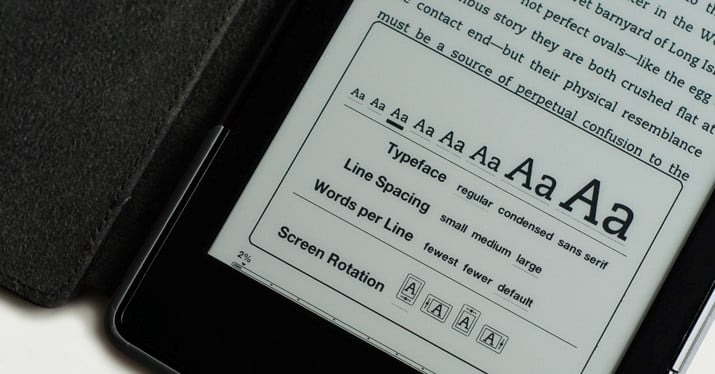
Accessibility Services for Modern Publishing
Most publishers believe their content is accessible.In reality, a large percentage of EPUBs and PDFs fail basic accessibility checks – from incorrect tagging and reading order to missing alt-text and poor semantic structure. These issues are often only identified when content is audited, rejected by distribution platforms, or flagged during compliance reviews.With regulations such as the European Accessibility Act now in effect, accessibility is no longer a technical consideration. It directly impacts distribution, institutional adoption, and market access.
At Cameo, we don’t approach accessibility as a final-stage fix. We take ownership of accessibility across the publishing workflow, ensuring that content is compliant, consistent, and ready for global use.
We support publishers in aligning with globally recognised accessibility standards, including WCAG 2.2, EPUB 3.3 accessibility requirements, and Section 508.
These standards define how content must be structured and interpreted by assistive technologies such as screen readers and braille displays. Compliance is not limited to technical validation, it requires correct implementation of structure, navigation, and semantic meaning within the content itself.
Our workflows are designed to meet these requirements across both print-derived and digital-first publishing environments.
Accessibility requirements vary depending on the format in which content is delivered.
EPUB files require structured navigation and semantic tagging. PDFs depend on correct reading order and tagging. XML workflows rely on consistent semantic structure to generate accessible outputs across formats.
We ensure that accessibility is maintained across EPUB, PDF, Microsoft Word, and XML-based publishing environments, so that content remains consistent and usable regardless of how it is accessed.
We support accessibility across a wide range of publishing environments, including journals, academic titles, educational content, and large-scale digital publishing programs.
Our experience spans high-volume journal workflows, long-form academic content, and multilingual publishing, where accessibility must be maintained consistently across languages and formats.
Accessibility is no longer just about meeting standards.
It is about ensuring that your content can be accessed, understood, and used by every reader across formats, platforms, and abilities.
If you would like to evaluate our typesetting capabilities, you can share a sample manuscript with us. We will review it and demonstrate how we process, structure, and deliver it as a production-ready output.